How I work.
Most people who get this far have the same first question: what does “finding the stories” actually mean? Do I interview you? Follow you around with a camera? Read your reviews? Yes, all of it, in a particular order. Here is the whole thing, start to finish, including the part where you sign something and the part where I tell you no.
Five things, every time.
1. Understand the business. I sit down with you and we talk. Not about marketing. About the work: how you started, what you make, who keeps coming back and why. Then I spend time inside the business while it runs. I read what your customers have said about you. I look at who is winning the searches you should be winning.
2. Sharpen the story. Every business has a handful of true stories its regulars already know. I find the ones that make someone new choose you, and I get them into a shape that survives being told in a photograph, a thirty-second video, a paragraph, and a Google listing.
3. Make the visuals match. I shoot the photographs and the video myself, inside your business, with the stories already decided. That is the difference between a shoot that looks nice and one that says something.
4. Get the words right. I write your stories in your voice, from everything I learned in the dig, and I shape them so search engines understand what you do and where. You will read your website and hear yourself.
5. Build the operating cadence. Then we set the rhythm for what happens every month after, so the stories keep getting told without you running a marketing department.

One set of hands is not a slogan.
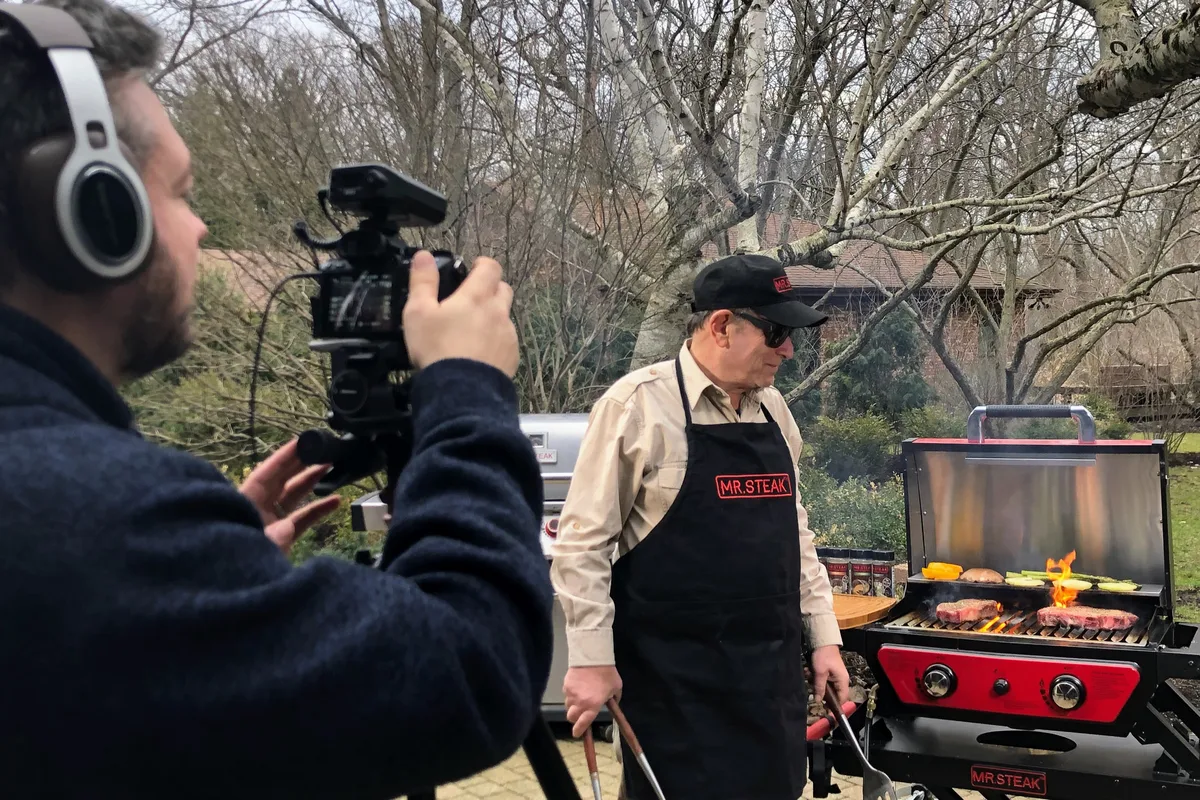
I do the interview. I do the research. I hold the camera. I edit the video. I write the copy. I build the site. I watch the search results. There is nobody on the other end of a hand-off, because there is no hand-off.
If you already have someone you trust for strategy, keep them. I’m not here to replace what you’ve built or the people who helped you build it. I make the work, and I make it match what you and they have already decided.
It starts with the foundation.
Every engagement begins the same way: the stories have to be found before they can be told. The Story Foundation is six things, in the same order, every time. The scope changes with the business. The list does not.
The dig. The owner interview, time inside the business, and the competitive and search research underneath it.
The visuals. The shoot. Photo and video captured together, scoped to what your business needs to show, not to a shot list from a template.
The words. Your stories, written in your voice and structured for search.
The place they live. Your website, built or rebuilt. Most owners think this is the whole job. It is the biggest piece, and it only works when the other five are done.
The groundwork. Your Google Business Profile, the on-page search foundation, and the technical work that makes any of this findable. Built, not listed as a recommendation.
The cadence. How the work keeps running once the Foundation is built, and the transition into the monthly.
Foundations start at $7,500, paid in stages as each phase of the work lands.
How long before it works
That depends on what you sell, and I’ll tell you up front, not after. If your buyers decide quickly (entertainment, events, restaurants), inquiries tend to move before anything else does. If your buyers research for a long time before they call (healthcare, professional services, anything with a long consideration), visibility and rankings move first and inquiries follow. I don’t promise the short version to businesses with the long buyer. Ask me which one you are, and I’ll tell you straight.
Then I stay.
The foundation finds the stories. The monthly keeps telling them. That is the difference between a business that got a nice website once and a business its market chooses first.
Every month has two constants: the search work (your Google profile, your pages, a report on what moved) and a set amount of new production (a visit to shoot, edit, and write). It comes in three sizes, each one flat monthly number that does not change when we change what we’re making. Which size fits is settled with you, in writing, when we start.
Three months is the shortest I’ll agree to, because that is roughly how long search takes to show meaningful movement. Anything shorter is a shoot, and you can book one of those separately.
The seat, and why it’s in writing.
Here is the mechanism nobody explains. Your stories and your competitor’s stories never conflict; two caterers can both have great ones. Your search rankings and theirs conflict every single day, because there is one top spot and you both want it. Any vendor doing search work for two competitors is quietly working against one of them. Every SEO provider has this conflict. I solved it by only taking one.
So I partner with one business per competing category per market, and we define both before you sign. Your category is whoever competes with you for the same customer. Your market is where that competition happens. Both go in the agreement in plain words, so the promise is exact, not a vibe. The edge cases (you add a service line, you open a second location, a client of mine moves into your lane) get settled in conversation, and we write those down too.
You hold the seat for as long as we’re working together on your search. If we ever scale down to basic upkeep with no active search work, the seat goes back on the market, and I’ll tell you that at signing, not later.
See it done before you decide.

Start with a conversation.
Thirty minutes about your business. No deck, no pitch, no number quoted on the call; I scope first and send one flat price after, in writing, with the seat defined. If I’m the wrong fit, I’ll say so and tell you who isn’t.